Engine running hot right now?
Stop as soon as you safely can and shut the engine down. Don't keep driving with a red temperature light or a gauge in the red. Opening the bonnet or the cap on a hot engine can scald you, and NRMA says the wait can run past an hour, so stay clear and be patient. Cold water poured into a hot engine can do damage too. If you're stopped on a freeway, everyone gets out on the side away from the traffic, hazards go on, and roadside assistance gets the call. Anyone in danger: ring 000.
Why do Perth summers catch out cooling systems?
Perth's summer runs hot, sunny and dry from December to March. On average it goes above 35 degrees on 26 days a year and above 40 on 5, and February averages a high of 31.7. RACQ points out that heat puts extra stress on the whole system, and a leak too small to notice in winter may let go under pressure.
RAA puts leaks at the top of the list of reasons engines overheat. Next come hoses that have worn through or split, radiators that no longer cool properly, and drive belts that have slipped or snapped. Most of those start small, which is why a car that keeps needing a top-up is worth a look before the heat arrives.
Cooling system jobs around Perth
After a country trip
RAC WA says country driving blocks the radiator core with dead insects and debris. If the car has done a run out along Great Eastern Highway or up the Great Northern, ask the mechanic to check the core at the next service.
Old or mixed coolant
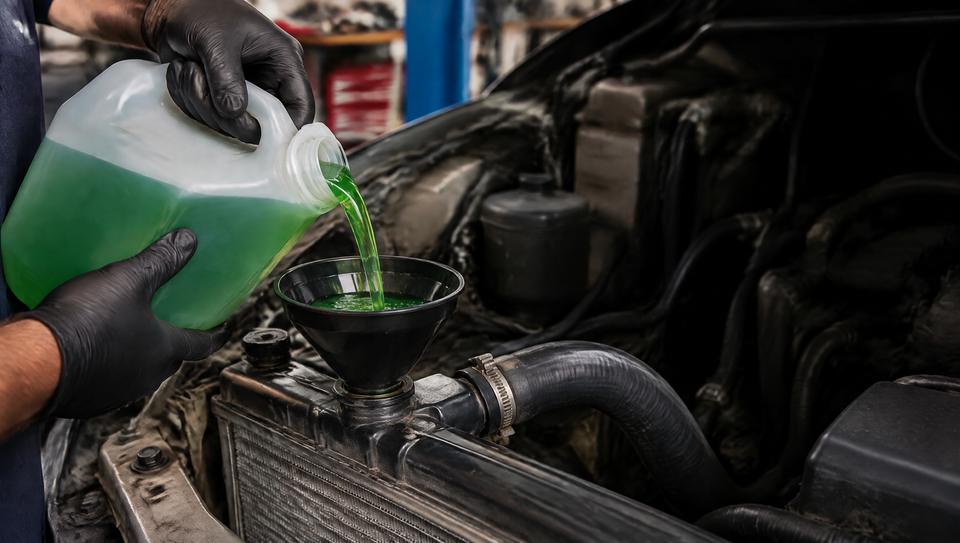
RAC WA suggests flushing and replacing the coolant at least every one to two years, or as your book says, and never mixing coolant types. Mixing can cause corrosion, which leads to overheating and early engine failure.
Hoses and belts
Rubber has a hard time in Perth's heat. RAC WA's pre-summer list includes checking hoses for softness and leaks, and drive belts for cracking, including the water pump belt on cars that have one.
If it's already overheated
Tell the mechanic, even if the car seems fine since. RACQ warns that harm from overheating doesn't always show straight away and can surface a long time afterwards, and a blown head gasket is one of the things to rule out.
Owner checks, and the mechanic's side of it
You can
- Read the level on the see-through coolant reservoir, on a cold engine only.
- Look for coloured drips or stains on the spot where the car usually parks.
- Watch the temperature gauge in stop-start traffic on hot days.
- If you top up, use the coolant your owner's manual names.
Leave to the mechanic
- A pressure test, which finds leaks too small to see.
- The radiator, water pump, thermostat, fans and hoses.
- Draining the old coolant and refilling with the type the maker specifies.
- Any work on a hot engine, or anything that means taking the cap off.
Our advice before December
We'd get a mechanic to pressure-check the cooling system and look at the coolant in spring, ahead of the first heatwave, and we'd track down any leak that needs regular top-ups. RACV says a car that keeps needing coolant has a leak or is using it internally, and that's not something to keep driving on.