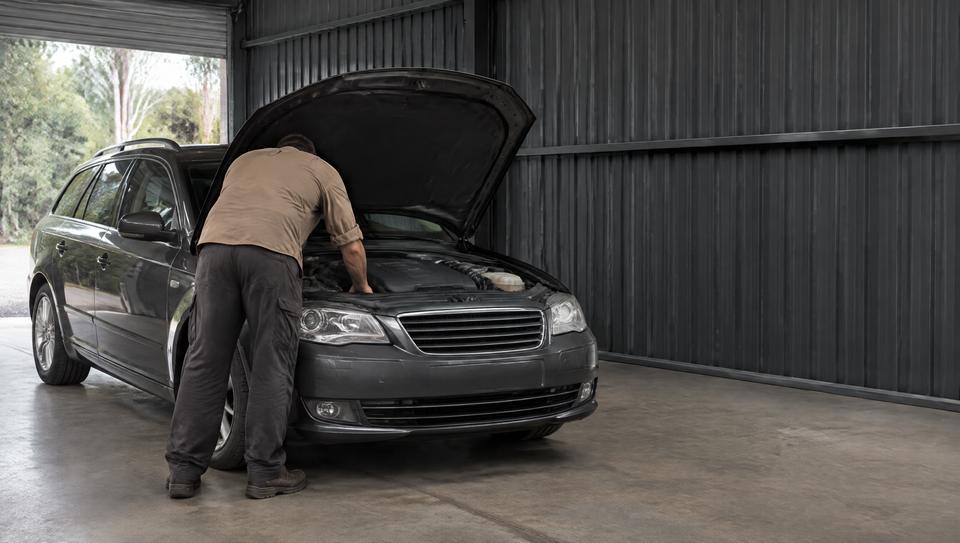
What makes European cars different to look after?
Mostly it's three things: the oil, the electronics, and how the car decides when it's due. None of it is mysterious, but each one rewards a mechanic who has done it before.
The oil is a code, not just a grade. A manual will usually name an oil approval as well as a grade such as 5W-30. Europe has its own classification, ACEA, with a C class for oils used with catalysts and particulate filters. ACEA doesn't certify oils itself, so makers do their own testing and keep their own approvals. Two oils with the same grade on the bottle can be different things.
Much of the car lives behind the scan port. The standard only requires emissions data at the car's diagnostic port, though many manufacturers use that port for all their systems. A basic reader sees the engine codes. A maker-level tool sees the gearbox, the brakes, the body modules and more, and that's what these cars need.
Routine jobs can need software. On many newer European cars, a new battery has to be registered to the car, and rear brake pads may need the electronic park brake wound back with a scan tool. Ask before assuming a small job is a simple one.
The car may set its own service date. Some modern cars use oil life monitors to estimate when the oil needs replacing, so the dash reminder may not match a neat kilometre figure. Follow the car's reminder and the book, and make sure both get updated.
Will an independent mechanic affect my warranty?
Not by itself. Servicing a new European car at a qualified independent mechanic, done to the maker's schedule and specifications, does not by itself void your warranty. The regulators' guide to the Australian Consumer Law says any suggestion that vehicles need servicing at a licensed dealer to keep your consumer guarantee rights is not correct.
There's one honest limit. If an independent repairer causes a defect, it's unlikely to be covered by the maker's warranty, and you'd seek a remedy from that repairer. On parts, RAC WA, citing the ACCC, says they don't have to carry the maker's brand, but they must be fit for purpose.
Information isn't the barrier it used to be either. Independent mechanics can buy the same service and repair information as dealers, for passenger cars made from 2002 onwards. Whether a particular workshop does is a fair thing to ask.
Questions to ask a European mechanic
- How often do you see my make, and this engine?
- Does your scan tool read every system on my car, or only the engine codes?
- Which oil approval will you use, and is it the one in my manual?
- Can you reset the service reminder and register a new battery if it needs one?
- Will you update the logbook or the digital service record?
What a good written estimate shows
- The service by name, as the book or the dash reminder calls it.
- The oil by grade and by the maker's approval code.
- Parts by name, and whether they're the maker's own or equivalent.
- Any coding, registering or software steps the job needs.
- Extra work listed separately, so you can decide on each item.
- How the service record gets updated, and when you'll see proof.
When should you still go to the dealer?
Recall work goes through the maker's dealer network, so that's where it belongs. Warranty claims start there as well. Some newer cars also have software or security steps that only the dealer can finish, so it's worth asking the mechanic up front. For the routine servicing and repairs in between, the choice is yours.
What you can do between services, and what to leave
You can
- Learn the oil approval code in your manual, and keep a little of the right oil in the boot.
- Take a photo of any warning message on the dash before it clears.
- Keep tyre pressures to the placard, cold.
- Keep every invoice, along with the digital service record if your car has one.
Leave to the mechanic
- Battery replacement where the car needs it registered.
- Rear brakes with an electronic park brake. Brake work isn't a DIY job.
- Anything that means connecting a scan tool or changing a setting in the car's computers.
If it were our car
We'd choose by the badge, not just the postcode. A mechanic who sees your make every week already knows its oil, its quirks and which jobs need software. We'd ask the scan tool question early, get the oil approval written on the invoice, and make sure the service record is updated. If the car's new, keep the book in order and the choice of mechanic stays yours.