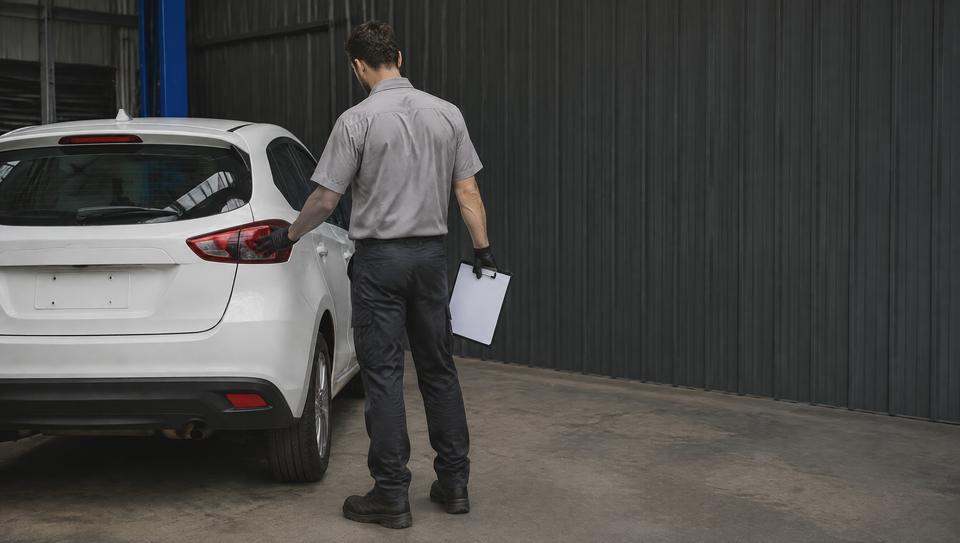
When do you need a safety certificate?
Queensland's transport department lists three times: when registration transfers to a new owner, when a car moves onto Queensland rego from another state or territory, and when an unregistered car is registered again.
Selling is where the detail matters. You don't need one before you advertise a registered car, but you must have one before you dispose of it, other than to a dealer. It's the seller's job, not the buyer's, and the new owner can't move the registration out of your name without a current certificate.
Disposing of a car without a current certificate, or not handing one over, can mean a fine of more than $700.
How long a Queensland safety certificate lasts
| Private seller | Licensed motor dealer | |
|---|---|---|
| Time, from the date of issue | 2 months | 3 months |
| Distance, from the date of issue | 2,000 km | 1,000 km |
| Which limit counts | Whichever runs out first | Whichever runs out first |
| Transfers it covers | 1 | 1 |
Who can issue one, and can they come to you?
Only an approved inspection station. The department's Find an AIS tool searches by suburb or postcode and by inspection type, so you can see who's close.
For a mobile roadworthy, the same tool can show only the stations offering a mobile inspection service. The department warns that its results rely on third-party information, so ring the station and check before you count on it.
The basic safety items on Queensland's list
- Tyres: wear, damage and whether they suit the car.
- Brakes: how evenly they pull the car up, and any leaks.
- Steering: play in the wheel and worn joints.
- Suspension: tired bushes and leaking shock absorbers.
- Body: rust or damage, mainly where it weakens the car.
- Windscreen: cracks and chips in the driver's view.
- Lights: headlights, brake lights and indicators.
What a safety certificate doesn't tell you
The department is plain about this: a safety certificate inspection isn't a full mechanical inspection. It covers basic safety items on the day, so a pass tells you little about what's ahead for the engine or gearbox.
If you're buying used, the department points you to a motoring group for a full mechanical check. A mechanic who knows the make can do a pre-purchase inspection too.
When don't you need one?
When a car changes hands, it doesn't need a safety certificate if it's unregistered, or if it's traded to or between licensed motor dealers. Whoever registers it again later will still need one. Other exemptions can apply, such as a car garaged in an exempt area at the time of sale, a beneficiary of a deceased estate, or a transfer between spouses.
Those come with conditions, so ring the Department of Transport and Main Roads before you rely on one.
What to ask the station first
- Do you test at the workshop, or can you come to the car?
- If it doesn't pass, how long do I have to bring it back, and what does the second look involve?
- Will I get the reasons in writing?
- Can you repair what you find, or will I need another mechanic?
What to do before the inspection
You can
- Check the headlights, brake lights, indicators and number plate light.
- Look across each tyre for uneven wear or cuts.
- Clear the cabin and boot so the inspector can reach the seatbelts and spare.
- Write down the odometer reading on the day, so you can track the distance limit.
Leave to the mechanic
- Repairing anything on the inspection report.
- Cracks, damage or rust the inspector has flagged.
- Issuing the certificate: that's for an approved inspection station.
Where we'd start
If you're selling, we'd get the known faults fixed, then have the inspection done close to listing the car. A private seller who's still commuting in it can use up the distance limit well before the 2 months is over. If you're buying, we wouldn't treat a certificate as proof the car's sound. It's a basic safety check, so get a proper look before you hand over any money.