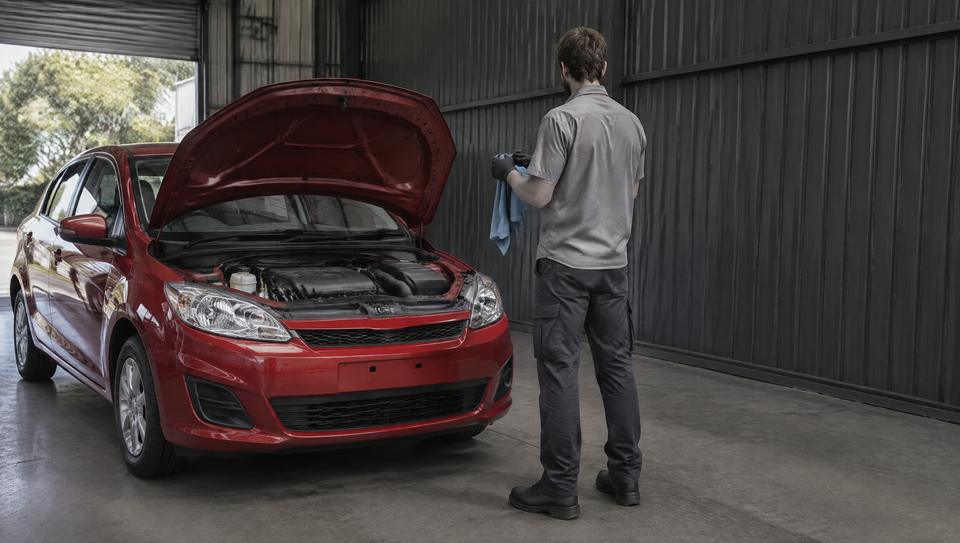
When does Victoria ask for an RWC?
Consumer Affairs Victoria lists three common times: when you sell a registered vehicle, when you re-register one, and when you need to clear some defect notices.
Selling is the one most people meet. If you're selling a registered car privately, the buyer needs a certificate that's less than 30 days old to transfer the registration. Most sellers get the RWC once the car is ready to list, so it's still current when a buyer turns up.
Who can issue one?
Only a licensed vehicle tester. Consumer Affairs Victoria describes the RWC as a general safety check conducted by one. Many workshops are licensed testers, and some mobile testers come to you, so ask when the mechanic calls.
Pick "Roadworthy or safety check" in the card and add the make and model. The job goes to a local business that does roadworthy inspections, and they'll tell you whether they test at the workshop or can come out.
Victoria's roadworthy next to its neighbours
| What it's called | How long it lasts | |
|---|---|---|
| Victoria | Roadworthy certificate (RWC), from a licensed vehicle tester | Valid for 30 days from the date of issue |
| New South Wales | Safety check (pink slip) at an AIS station, for most light vehicles more than 5 years old, yearly | Valid for 6 months |
| Queensland | Safety certificate, only from an approved inspection station | Private seller: 2 months or 2,000 km |
What usually gets looked at in a safety check
- Tyres and wheels: tread, damage and the right size for the car.
- Brakes, steering and suspension.
- Lights, indicators, the horn and windscreen wipers.
- The windscreen and windows, seats and seatbelts.
- Rust or damage in the parts of the body that carry load.
- Leaks, and the exhaust.
If the car doesn't pass
The tester gives you a report listing what needs fixing. You can have the work done by the tester's workshop or by any other mechanic, then take the car back for the items to be checked.
Ask the tester how long you have to come back for that recheck before it becomes a full new inspection, and get the answer in writing.
Before the tester sees it
You can
- Clean the car inside and out so the tester can see what they're checking.
- Check every light and indicator works, with someone standing behind the car.
- Check the tyres for wear and pressure, and that the windscreen washers squirt.
- Find the registration papers and the service history.
Leave to the mechanic
- Brake, steering and suspension faults found on the report.
- Any repair to rust in the body's load-carrying parts.
- The safety check itself: only a licensed vehicle tester can sign the certificate.
Where we'd start
If you're selling, we'd get any known faults fixed first, then get the RWC once the car is clean and ready to advertise, so the 30 days are spent selling, not waiting. If you're buying, remember an RWC is a general safety check on the day: for a car you're about to spend real money on, a separate pre-purchase inspection by a mechanic who knows the make looks further.