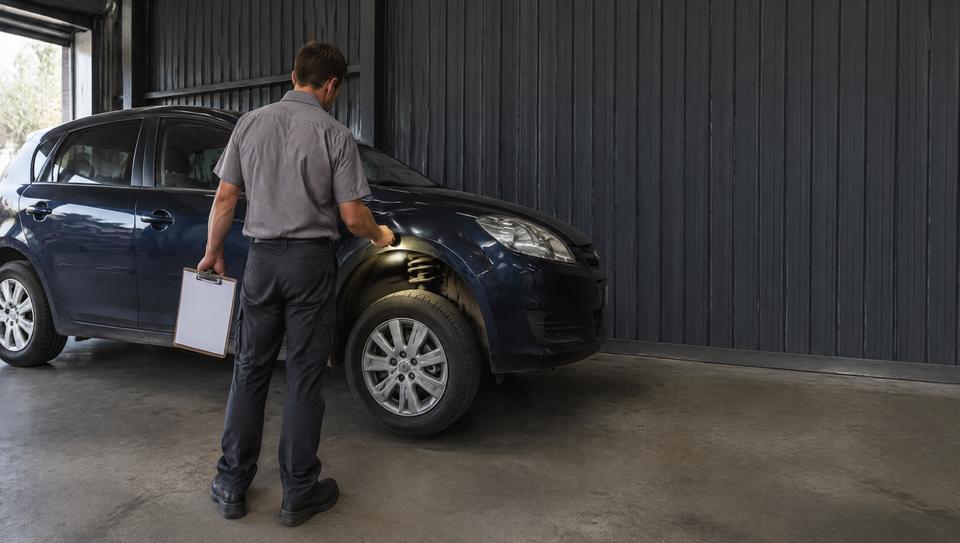
What does a pre-purchase inspection look at?
The list depends on who does it, so ask before you agree to anything. RAA says many of its inspections cover the engine, cooling, fuel and exhaust, electrical, transmission, wheels and tyres, and suspension and steering. RACV describes its standard check as a visual external examination of components, and recommends a more detailed brake inspection for 4WDs, SUVs and bigger cars.
Visual is the word to notice. Nobody pulls an engine apart at an inspection, so nobody can tell you exactly what's happening inside it. A good mechanic still learns a lot from a cold start, a road test, a scan of the car's computers and a look underneath on a hoist.
The mechanic is there to report, not repair. RAA makes the same point about its own inspectors: they don't fix issues during the appointment.
Inspection, roadworthy or PPSR: which one tells you what?
| Pre-purchase inspection | Roadworthy check | PPSR search | |
|---|---|---|---|
| Who it's working for | You, the buyer | The state's transport rules | You, the buyer |
| What it tells you | The car's condition and what it's likely to need | Whether the car met a safety standard on the day | Whether the car is recorded as stolen, written off or carrying a debt |
| What it won't tell you | What's hidden deep inside the engine or gearbox | Wear that hasn't become a safety fault yet | Anything about how the car runs |
| Who does it | An independent mechanic | It changes by state: see roadworthy rules | You, online, using the VIN |
Why isn't a roadworthy enough?
Because it answers a different question, and the answer changes at the border. Victoria calls its RWC a general safety check done by a licensed vehicle tester. Queensland says a safety certificate inspection is not a full mechanical inspection. In WA, private sellers aren't legally required to do a roadworthiness check at all.
So a car can hold a current certificate and still have a tired clutch, a leaking head gasket or a cambelt that's overdue. None of those has to show up on a safety check on the day.
When does an inspection matter most?
On a private sale. Consumer Protection WA puts it plainly: buy from a private seller and you're buying at your own risk, without the Australian Consumer Law behind you. Consumer Affairs Victoria says a private sale has no statutory warranty, so inspect the car before you agree to buy or pay a deposit.
It still earns its place at a car yard. If an inspection isn't possible with a licensed trader, Consumer Affairs Victoria says the contract should make the sale conditional on you being satisfied with an independent report. If any seller refuses an inspection, its advice is simple: don't buy the car.
How to set one up
Do the checks that need no mechanic
Get the VIN and run a PPSR search. Read the logbook. Then compare the odometer with the car's age: Consumer Protection WA says a typical Australian driver covers roughly 12,000 to 15,000 km a year, and a reading that doesn't line up could be a sign of tampering.
Ask for a cold engine
Ask the seller not to start the car before the mechanic arrives. Plenty of faults show themselves in the first few minutes, then settle down.
Sort out where it happens
A mobile mechanic can go to the seller's driveway, or the seller can take the car to a workshop, where a hoist shows more. Pick a flat, safe spot. RAA notes some rare vehicles and older cars may not be eligible for a mobile inspection.
Read the report before you make an offer
RACV's traffic light guide is a handy way to think about any report: go, caution or stop. A caution item is something to weigh up and raise with the seller. A stop item is usually your answer.
What a good inspection report shows
- Which car was checked: the rego, the VIN and the odometer reading on the day.
- What was looked at and what wasn't, including whether it went on a hoist and a road test.
- Anything needing attention now, set apart from jobs that are coming up.
- Any fault codes from the scan, and whether codes look to have been cleared recently.
- Leaks, coolant condition and any signs of past accident repairs, stated plainly.
- What the inspection includes and when you'll get the report, agreed in writing before it starts.
What you can check yourself, and what to leave
You can
- Look for uneven tyre wear and panel gaps that don't line up.
- Match the stamps in the service book against the dates and the odometer.
- Try every switch: windows, air conditioning, lights, wipers and the horn.
- Take it for a test drive on roads you know, with the radio off.
Leave to the mechanic
- Anything underneath. Never go under a car held up only by a jack.
- Reading the car's computers for stored and recently cleared codes.
- Judging brakes, steering, suspension and engine condition.
Questions to ask before you say yes
- What's included in the inspection, and what isn't?
- Will the car go on a hoist and on a road test?
- Will you scan it and tell me if codes have been cleared lately?
- Will I get the report in writing, with the most urgent jobs first?
- How often do you work on this make?
If it were our money
We'd run the PPSR search and read the logbook first, because either one can end the deal before anybody drives anywhere. If the car's still in the running, we'd have a mechanic who knows that make go over it before any deposit changes hands. A seller who won't allow that has given you your answer.