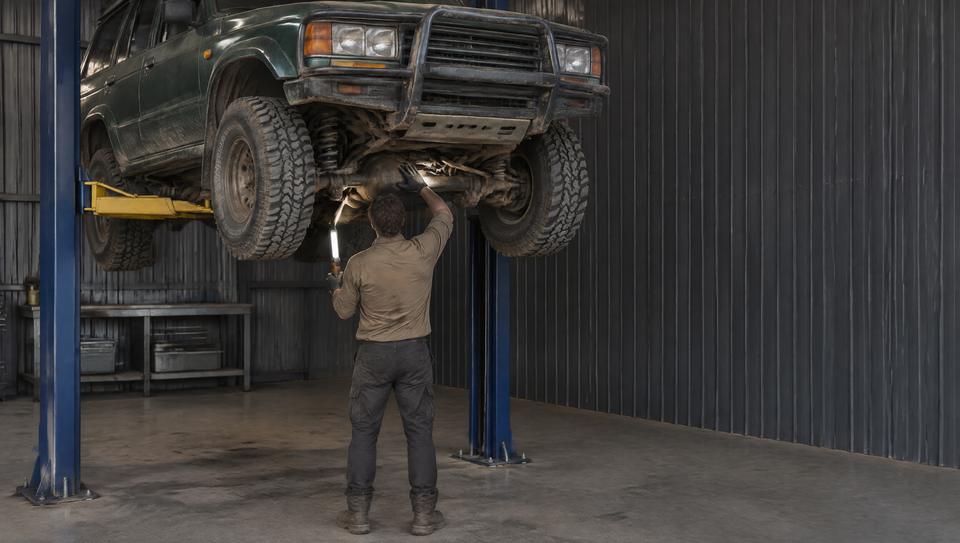
Why Perth 4WDs and diesels need someone who knows them
Perth is the main service centre for WA's resource industries, but most of the mining and petroleum work happens elsewhere in the state. That puts a lot of Perth utes and four-wheel drives on very long roads. Great Northern Highway runs almost 3,200 km from Midland to Wyndham, the longest highway in Australia, and Great Eastern Highway covers 590 km to Kalgoorlie.
Those runs, plus towing and sand, are what a diesel's injection system, turbo, cooling and driveline feel most. A mechanic who sees them every week knows which checks matter for that use, and which parts to have on hand before a big trip.
4WD and diesel driving from Perth
Beaches and dunes
Up the coast at Lancelin, driving a four-wheel drive on the beaches and the dunes behind the town is a popular weekend. RAC WA says not to run more than 18psi in each tyre on sand, to keep a steady, controlled speed and stay clear of the tide line, and to pump the tyres back to the right pressures afterwards. After salt water and sand, ask the mechanic to check the brakes, wheel bearings and underside.
Long runs north and east
On country runs RAC WA says the radiator core gets blocked by dead insects and debris, so have it cleaned and the cooling system checked after a trip. Take the car in early before a long trip: the nearest city of more than 100,000 people is Adelaide, over 2,100 km away.
Modified 4WDs and WA inspections
In WA, changing a vehicle's body, engine or dimensions is one of the reasons it has to go for an inspection, and the Kelmscott centre handles highly modified vehicles when the department sends them there. If you're planning a lift kit or bigger tyres, ask whether it'll need one.
A licence to check
WA requires every motor repair business to hold a licence, diesel and 4WD workshops included.
The diesel jobs that come up most
A diesel that mostly does short city trips can block its particulate filter: exhaust and DPF repairs in Perth covers why. Many newer diesels also use AdBlue. RAC WA says a typical tank holds about 15 to 20 litres and uses roughly 10 to 15 litres per 10,000 km, and if it runs out the car may not start or may go into limp mode. If AdBlue goes into the fuel tank, don't drive it or even switch the ignition on.
Vehicles that sit for weeks between trips have one more risk. RACQ says diesel bugs (bacteria and fungi living where fuel meets water) grow in tanks with water in them or that aren't used often, and the sludge they make blocks filters.
What to ask a Perth 4WD or diesel mechanic
- Which schedule in my book fits a car that does sand, towing and long highway runs?
- Will you check the diff and transfer case oils at this service?
- What will you look at underneath after beach driving?
- Do the fuel filters you use meet the maker's specification?
- Will my modifications need a WA inspection?
What we'd do
We'd write how the car is really used in the note: beach, towing, the run north for work, or mostly freeway. Then we'd have it looked at a few weeks before any big trip, which leaves time to order parts if something's tired.