Temperature light on, or steam from the bonnet?
Pull over somewhere safe and switch off. Don't open the bonnet or touch the radiator cap while it's hot: the NRMA says cooling down can take more than an hour. Don't pour cold water into a hot engine. On the M1 or the Hunter Expressway, get right off the road with the hazard lights on and call roadside assistance if you have it. If anyone is hurt or in danger, call 000.
Why Newcastle cooling systems get found out
Summer heat
Newcastle's humid summers can top 40 degrees, and Nobbys Head has recorded 42.5. RACQ says hot weather adds stress, and even minor leaks may fail under pressure, so a seep that was harmless in winter can become an overheat in January.
The climb out of the Hawkesbury
Heading south, the M1 drops down to the Hawkesbury River and climbs back out through sandstone cuttings. Towing a van or a boat up that hill on a hot day is a hard test for a radiator, a fan and a water pump.
Holiday queues up the coast
Until the M1 extension to Raymond Terrace opened in September 2026, the old Pacific Highway section there was a holiday bottleneck, with delays of hours not uncommon. Slow traffic in the heat still finds out a tired fan, so check the coolant before a long weekend away.
Radiators are their own trade
NSW has a separate tradesperson class for radiator work, covering radiators, heating, thermostats and fuel tanks. It doesn't cover hybrids or battery electric cars, so mention it if yours is one.
What usually goes wrong
RAA puts leaks first, then worn or burst hoses, a radiator that isn't shedding heat, and loose or broken belts. Mixing coolant types can turn it into a jelly that blocks the system, so topping up with whatever's in the shed can make things worse.
A car that keeps needing coolant is losing it somewhere, outside the engine or inside it, and RACV says that needs tracing. Damage from an overheat can also turn up days, weeks or months later, RACQ warns, so tell the mechanic about any recent overheat even if the car seems fine now.
What you can check, and what to leave
You can
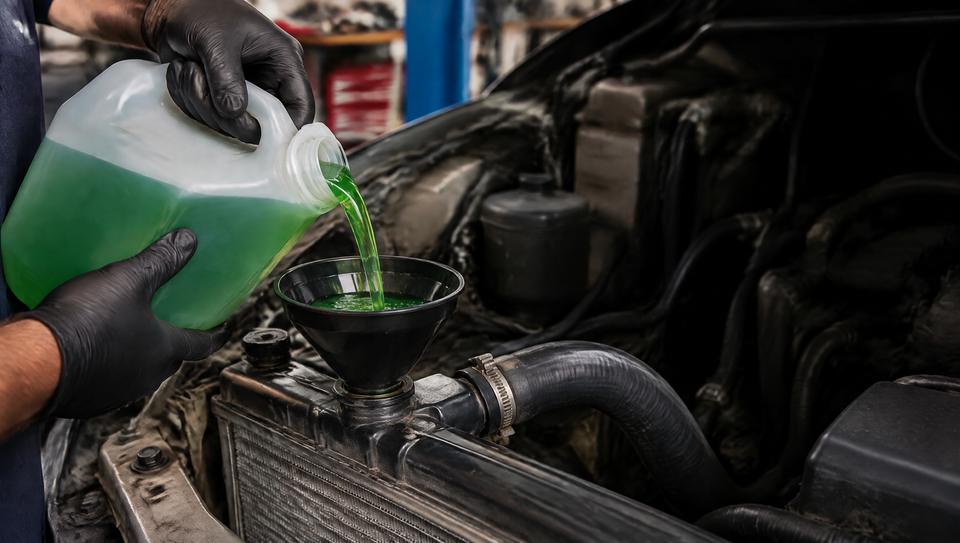
- Check the coolant level on a cold engine, against the marks on the overflow bottle.
- Look for drips under the car after it's been parked overnight.
- Watch the temperature gauge in traffic and on hot days.
- Use only the coolant type the owner's manual names.
Leave to the mechanic
- Pressure-testing the system to find a leak.
- Hoses, the water pump, the thermostat and the radiator itself.
- Anything involving a hot engine or the radiator cap.
- Checking for a head gasket problem if coolant vanishes with no visible leak.
Where we'd start
If the car has needed top-ups or the needle sits higher than it used to, we'd have the system pressure-tested in spring, before the first heatwave. And once the gauge reaches red, we'd stop, switch off and get it towed rather than limp it home.