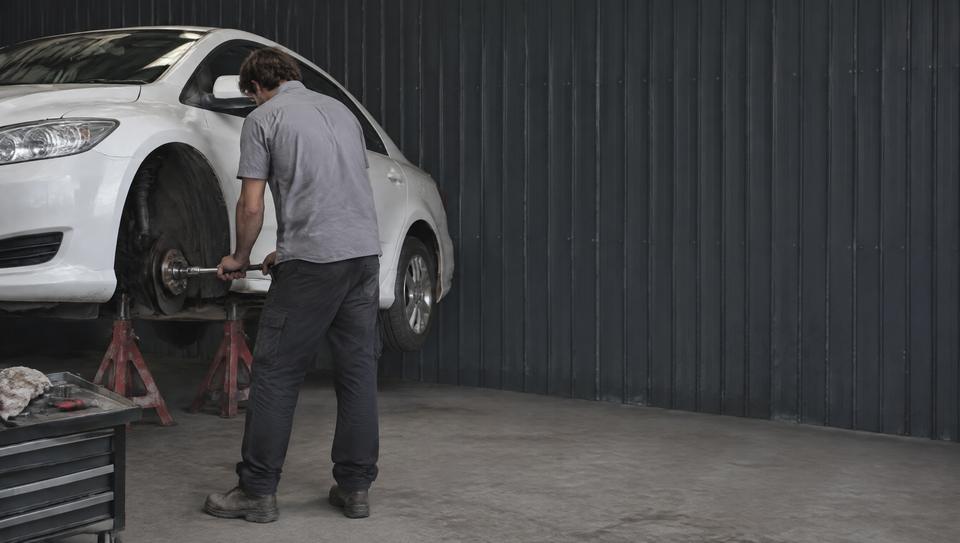
Brakes feel wrong on the way down?
If the pedal goes soft or sinks low, the car pulls hard to one side, or you smell burning on a descent, slow down gently, pull over somewhere safe and switch off. Leave the car where it is until a mechanic has looked at the brakes. If anyone is hurt or in danger, call 000.
What Hobart's roads do to a car
Down off Mount Nelson
The run home from Kingston comes down off Mount Nelson on the Southern Outlet, and plenty of suburbs sit on steep foothills, so brakes work harder per kilometre here than on flat ground. Squeals, grinding, a pulsing pedal or a pull to one side all mean it's time for a look.
The mountain road
The summit of kunanyi, 1,271 m up a narrow sealed road about 22 kilometres from the city, is a long climb and a lot of braking on the way back. Drop to a lower gear for the descent rather than riding the brakes the whole way.
Near the water
Hobart sits on the Derwent estuary, and Howrah, Rokeby and Lauderdale reach the water along the South Arm Highway. A car that lives by salt water can rust underneath, around brake lines, exhaust brackets and the floor, well before the paint on top gives anything away.
The Meehan Range stretch
Variable speed limits went up between the airport and Hobart in 2012 after crashes linked to traffic and weather on the Meehan Range. Worn wipers, bald tyres or a dim headlight are worth fixing before that drive in the wet.
What RACT sees at the roadside
After flat batteries, RACT's most common call outs in Tasmania are won't-starts, engine trouble, tyre or wheel problems, lockouts and cooling faults. Most of those give some warning first: a new noise, a light on the dash, a temperature gauge sitting higher than usual.
Acting on the warning is usually a smaller repair than the breakdown. RACT's own advice is to stay on top of regular servicing so faults are found early.
Your rights with a repair in Tasmania
There's no mechanic licence in Tasmania to look up, so the checks are different: ask about the business's ABN, its insurance and the trade qualification of whoever will work on the car.
The Australian Consumer Law applies here as it does everywhere. A repair has to be done with due care and skill, be fit for any purpose you made clear, and be finished within a reasonable time if no time was agreed.
Get the estimate in writing before work starts, and an itemised invoice at the end. If the mechanic finds more once the car's apart, they should ring you before doing it.
Questions to ask before you say yes
- What did you find, and can you show me?
- Which part is urgent, and what can safely wait?
- Is the estimate written down, with parts and labour listed?
- If you find something extra once it's apart, will you ring me first?
- If rust is involved, how far does it go?
- What warranty comes with the repair?
Before it goes in, and after
You can
- Note when the problem shows up: on hills, on cold starts, when braking or when turning.
- Take a photo of any warning light on the dash.
- Hose salt and grit off the underside after a run along the beach roads.
- Check the oil and tyre pressures on a cold car.
Leave to the mechanic
- Brake work of any kind.
- Cutting out and repairing rust.
- Reading fault codes and finding the cause.
- Anything that means working under the car.
Where we'd start
We'd describe the problem in plain words and say exactly where it happens: coming down the Outlet, on the first start of a cold day, turning into the driveway. That one detail often saves the mechanic a lot of looking. Then we'd get the estimate in writing before saying yes to anything.