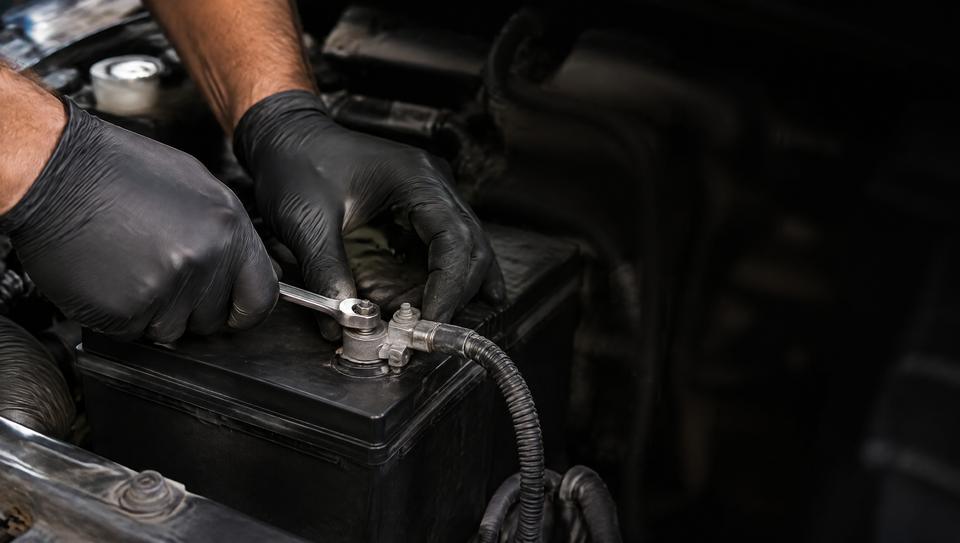
Battery dead somewhere busy?
If the car won't start on a highway shoulder or in a car park lane, get everyone away from the traffic first and put the hazard lights on. Call roadside assistance if you have it, and 000 if anyone is hurt or in danger. If the battery is swollen, cracked, leaking or smells of rotten eggs, don't try to jump start it.
Why batteries give out so often in Tasmania
RACT answered 65,000 call outs across Tasmania in the year to October 2025, and more than 35 per cent were battery related, the leading cause on its list. Its rule of thumb is to test a battery after three years, because most last around four.
Hobart gets light frost most years, and a cold start asks more of a battery that's already lost some of its strength. Short trips around the hills don't help either: a few minutes to the shops or school may never run the engine long enough to put back what the start took out.
What's particular to batteries in Hobart
Before the drive to the ferry
Devonport, where the Spirit of Tasmania comes in, is 284 km from Hobart. RACT's winter advice is to make sure the battery is well maintained and holds a good charge before long trips, so have it tested before you leave, not in the queue for the boat.
Parked outside all winter
RACT suggests parking in a garage where you can. If the car lives on the street or in an open driveway through winter, a test before the cold months beats finding out in the dark at seven on a frosty morning.
Cars that sit for weeks
A car left at a holiday house, in long-stay parking or at home while you're away still draws a little power, and newer cars with alarms and keyless entry draw it all the time. A battery that's weeks into that may not have a start left in it.
Mornings up the mountain
It frequently snows on kunanyi between May and October. If the car's heading up for the view or the snow, a battery that struggled at home is a poor bet at the top.
Battery, or something else?
A slow crank, dim lights or a single click are the classic signs, but a charging fault or a loose, corroded terminal can look the same. A mechanic tests the battery and the charging system together, so you're not sold a battery the car didn't need.
Newer cars add a wrinkle. Cars with engine stop-start usually need a particular type of battery, and some need the new one registered to the car's computer after it's fitted. Give the make, model and year so the right battery comes along.
What the mechanic should tell you before fitting one
- The test result for the old battery and for the charging system.
- The battery they'll fit, by type, size and cold-cranking rating, matched to your car.
- Whether the car needs the new battery registered or any settings reset.
- The warranty on the new battery, in writing.
- What happens to the old one.
Your part, and the mechanic's
You can
- Note when it struggles: the first start of the day, after a short trip, or after the car has sat.
- Take a photo if a battery or charging light shows on the dash.
- Turn off lights and accessories when you park.
- Find the jump-start points in the owner's manual before you ever need them.
Leave to the mechanic
- Testing the battery and the alternator.
- Choosing and fitting the right battery for a stop-start car.
- Registering the battery or resetting settings afterwards.
- Tracking down a drain that flattens the battery overnight.
Our take
We'd have the battery tested at the autumn service once it's past three years old, rather than wait for a flat one on a frosty morning. If it already won't start, pick "Come to me": a battery swap is one of the jobs a mobile mechanic can usually do right there in the driveway.