Felt it through the wheel or the pedal? Slow down and stop
If a clunk comes with loose steering, a pull to one side, a wobble or a brake pedal that feels different, pull over somewhere safe and switch off. The same goes for anything dragging on the road. If the noise began right after a tyre change, stop and have the wheel nuts checked before you go any further. Don't get under the car to look, even if it's only a hanging exhaust. If anyone is hurt or in danger, call 000.
When do you hear it?
| Where to look | How soon to act | |
|---|---|---|
| Over bumps or speed humps | Suspension parts, or a section of exhaust that's come loose (NRMA) | Within a week or so, sooner if it's getting louder |
| Turning a corner | Steering, wheels and tyres, or a worn wheel bearing (NRMA) | Soon. Steering parts don't improve with time |
| Tight turns in a car park | A clicking or clunking CV joint, the flexible joint in the driveshaft (RAA) | Soon. A split rubber boot needs urgent attention |
| Braking | Wear or damage in the discs, calipers or pads (NRMA) | Now. See grinding brakes |
| Moving off or changing gear | Engine mounts, universal joints or the axle, all on RAC WA's list of parts that clunk and thump | Soon, while it's still only a noise |
| A tinny rattle from underneath | Something loose or lodged under the car, often part of the exhaust or suspension (NRMA) | As soon as you can |
Is the rattle inside the car or under it?
Start with the easy one. Empty the door pockets, glovebox, console and boot, and make sure the spare wheel and jack are tied down. Loose coins, a water bottle or a child seat buckle can sound far worse than they are. If the noise goes, you've saved yourself a trip.
A rattle that changes with engine revs usually sits on or near the engine or exhaust, such as a heat shield (the thin metal cover over the hot exhaust). One that changes with road speed or rough surfaces is more likely the suspension or something underneath. NRMA says rattles from under the car mean something's loose or has lodged there, so have those checked as soon as you can.
How to narrow it down before you send the job
Clear the car out
Take out everything loose, including what's in the boot well. Then drive your usual route with the radio off.
Take a passenger
RAC WA suggests a friend for a second opinion. Someone in the back seat can often place a noise the driver can't.
Find a quiet car park
With the window down, turn slowly to full lock each way. Then roll over a speed hump at walking pace.
Record it
A phone recording, plus a note of when it happens (hot or cold, left or right, on or off the brakes), tells the mechanic more than a description will.
What will the mechanic check?
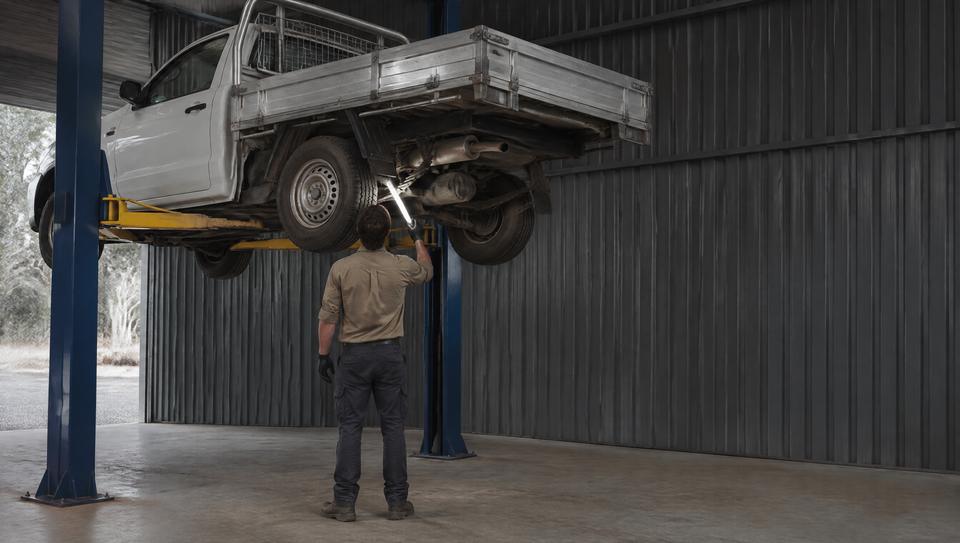
They'll start with a drive, with you if you can, so they hear what you hear. Then the car goes on a hoist so they can lever each joint and look for movement. The usual list is bushes (rubber mounts that stop metal touching metal), ball joints (the pivots that let the wheels steer and move up and down), sway bar links (short rods that steady the car in corners), shock absorbers and their mounts, tie rod ends and exhaust hangers.
Noises travel along the body, so the clunk behind your left shoulder may start somewhere else. That's why a proper look pays off, compared with replacing whichever part someone guessed.
A mechanic who does plenty of suspension and steering work suits this, because feeling play in a joint takes practice. If you've got a 4WD with a bullbar, a towbar or a lot of gear on board, say so: extra weight is hard on these parts.
Before you say yes, ask
- Which part is it, and can you show me the movement in it?
- Is this a safety problem or only a noise?
- Should the matching part on the other side be done too?
- Will the car need a wheel alignment afterwards?
- Can I have that in a written estimate?
What you can check, and what needs a hoist
You can
- Empty the cabin and boot and see if the noise goes.
- Check that the spare, the jack and any roof racks are tight.
- Note when the noise happens, and record it.
- Look over the tyres for damage.
Leave to the mechanic
- Lifting the car and checking joints and bushes for play.
- Anything to do with the steering, suspension or brakes.
- Refitting or repairing the exhaust.
- A wheel alignment after steering parts change.
What we'd do next
We'd start by emptying the car, because it takes ten minutes and sometimes ends the matter. If the noise stays, we'd record it and send the job this week, saying exactly when it happens. If we could feel it through the wheel or the pedal, we wouldn't wait, and we'd ask for someone to come to the car. Noises rarely fix themselves, but most are small when they're caught early.