Grinding, a wobble or a loose wheel? Stop
A hum can wait a few days. A loud grinding from one corner, a wobble through the steering wheel or a wheel that feels loose can't. Slow down, pull over somewhere safe and switch off. A badly worn bearing can run very hot and let the wheel move on its hub, so stay clear of the wheel centre. If you've stopped somewhere exposed, turn the hazards on, move everyone well back from the traffic and ring roadside assistance if you have it. If anyone is hurt or in danger, call 000.
Why does a wheel bearing hum?
A wheel bearing is the ring of steel balls or rollers that lets a wheel spin on its hub while carrying the weight of the car. On most modern cars it's sealed inside a hub unit and packed with grease. When that seal fails, water and grit get in, the grease goes, and the smooth metal surfaces start to pit. That rough surface is the noise you hear.
It starts faint, often passing for tyre drone on a coarse road. Over weeks it grows into a hum or growl. The giveaway is that it stays there on smooth bitumen, and it changes in bends, because a bend moves the car's weight from one side to the other.
Road speed or engine revs? That's the first question
| What the noise follows | Most likely | |
|---|---|---|
| Hum or growl that changes in bends | Road speed and steering | A wheel bearing |
| Drone that changes on a different surface | Road speed and the road | Tyres worn unevenly or near the end of their life |
| Whine that changes when you lift off the accelerator | Road speed and load | The differential or gearbox, which NRMA says might be low on oil |
| Whine or grind from the engine bay, even when parked | Engine revs | An alternator bearing, a belt pulley or the power steering pump |
| Click or clunk on tight turns | Steering angle | A CV joint. See noise when turning |
Three checks that narrow it down
Take a passenger
RAC suggests getting a second opinion from a passenger before you see a mechanic. Another pair of ears can often pick the corner it's coming from.
Try a gentle sweep
On an empty road at a steady speed, ease the car slightly left, then slightly right, staying in your lane. A hum that gets louder one way means that side is taking the load. Only try this where it's safe.
Raise the revs while parked
In Park or neutral with the handbrake on, lift the revs a little. If the noise follows the revs with the car standing still, it's under the bonnet, not at a wheel.
Why does the car whine when I accelerate?
A whine has more than one home. RAC says it can come from a drive unit, axle, wheel bearings, gearbox or power-steering pump.
If it follows engine revs in every gear, look under the bonnet first. An alternator with a worn bearing makes a steady whine or grind that climbs with the revs, and it often brings a battery light with it before long. A power steering pump gets louder as you turn the wheel.
If it follows road speed and only comes on under power, or disappears when you lift off, the diff or gearbox is more likely.
What will the mechanic do?
They'll road test it first, then lift the car, spin each wheel by hand to feel for roughness, and rock the wheel top to bottom to check for play. They'll check the CV joints too, because NRMA lists them alongside wheel bearings as things that can whirr or grind under a car.
How the bearing is fitted decides how big the job is. Some bolt in as a complete hub. Others have to be pressed out of the suspension, which takes longer, and more so if there's rust. On many cars the sensor that feeds the ABS reads from the bearing as well, so a bad one can also bring on an ABS light.
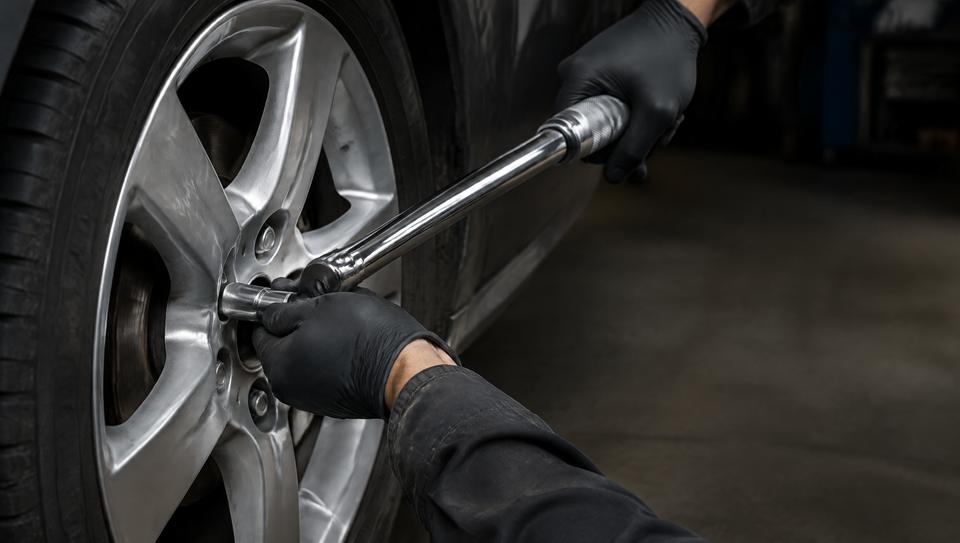
A new hub has to be tightened to the vehicle's specification to prevent failure, so it's not a driveway job. Any mechanic who does suspension work regularly can handle it.
What a good estimate should say
- Which corner of the car, and how they confirmed it.
- Whether it's the bearing alone or the whole hub.
- Whether the other side was checked, and what they found.
What you can do, and what's the mechanic's job
You can
- Note the speed the noise starts and whether it changes in bends.
- Look at your tyres for uneven wear.
- Take a passenger along to help place the noise.
Leave to the mechanic
- Lifting the car and checking each wheel for play and roughness.
- Pressing or bolting in the new bearing or hub.
- Checking the ABS sensor, brakes and CV joint while it's apart.
What we'd do
A light hum that's only just started: we'd send the job this week and keep highway trips short until it's seen. A growl that's getting louder, or anything you can feel through the wheel: we'd stop taking the car out and ask for a mobile mechanic to come to it. Bearings usually give you plenty of warning, so use it.