If it's overheating now
Pull over somewhere safe, switch off and let it cool. Don't open the bonnet or the radiator cap while it's hot, and don't pour cold water into a hot engine. NRMA says cooling can take more than an hour, so call roadside assistance if you have it. If anyone is hurt or in danger, call 000.
Why Adelaide finds cooling faults
Forty-degree weeks
Adelaide usually gets several days of 40 °C or more each summer, and the record is 47.7 °C. RACQ says hot weather adds stress to the system, and even a minor leak may fail under pressure. A hose that was only weeping in October can split in January.
The climb out of the city
Leaving for the Hills or Melbourne, the South Eastern Freeway climbs from Glen Osmond. Towing up it on a hot afternoon is a hard test for any cooling system, so that's the trip to have it checked before.
Help is far apart up north
On the Birdsville Track the fuel stop at Mungeranie is 204 km from Marree, and travellers are told to carry water and supplies. That's the wrong place to find out a hose was tired. Have the cooling system pressure-tested in Adelaide before a trip like that.
What usually causes it
RAA, South Australia's motoring club, says a leak is the number one reason an engine overheats, followed by worn or burst hoses, a radiator that isn't doing its job, and loose or broken belts. A failed water pump, a stuck thermostat or a fan that won't switch on can do it too.
The signs of a leak are green or orange puddles, a sweet smell after a drive, or white crust around the hoses and radiator. If you're topping up coolant regularly, it's going somewhere: out through a leak, or into the engine, and either one needs tracing.
What you can check, and what to leave to the mechanic
You can
- Check the coolant level in the overflow bottle, only when the engine is cold. It should sit between the low and high marks.
- Look under the car for green or orange drips after it's been parked.
- Watch the temperature gauge on hot days and on climbs.
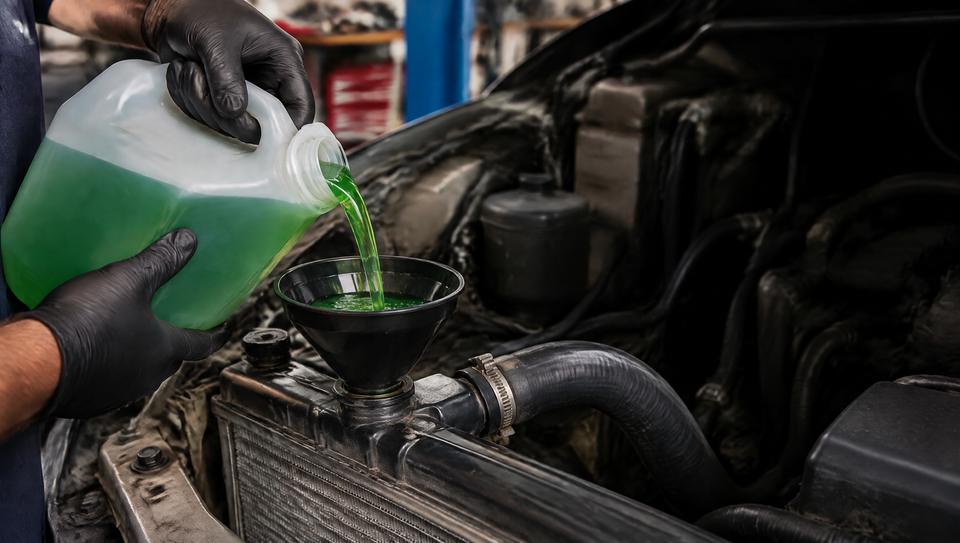
- Top up only with the coolant type in the handbook. Mixing types can turn it to a gel that clogs the system.
Leave to the mechanic
- Pressure-testing the system to find a leak.
- Replacing hoses, the radiator, the thermostat or the water pump.
- Flushing and refilling with the right coolant.
- Checking an engine that has overheated for head gasket damage.
If it were our car
We'd have the cooling system pressure-tested at the spring service, before the first 40 °C week, and tell the mechanic if the car tows or heads north. If it has overheated even once, we'd ask for a head gasket check with the repair, because RACQ says damage can show up days, weeks or even months later.