Stuck, or been in floodwater?
If the car has stopped somewhere unsafe, get everyone clear of the traffic, put the hazard lights on and call roadside assistance if you have it. If anyone is hurt or in danger, call 000. If the car has sat in floodwater, don't try to start it or jump it: RACQ says call the insurer first, and flooded hybrids and electric cars carry a risk of electrocution or fire.
Why batteries give out sooner here
NRMA and RACV both say heat weakens a battery and shortens its life. A battery that sits under the bonnet in the Townsville sun day after day ages faster than the same battery somewhere cooler.
NRMA puts a typical battery at three to five years and recommends regular testing once it's about three years old. Here, we'd treat the third birthday as the point to test at every service, and replace on the test result rather than a guess.
Short trips make it worse. RACV says trips under 20 minutes don't give the alternator time to recharge the battery, so a car that only does short hops across town rarely gets a full charge.
Townsville things that catch batteries out
Parking in the sun
RACV's hot-weather advice is to park in the shade or a garage. At work, on the base or down at the beach, the shady spot is worth the extra walk.
Cars left while you're away
Away on exercise, on leave or working out west? RAC WA says a battery will likely need attention if the car sits unused for more than two weeks. RACQ adds that a keyless car left open keeps drawing power while it waits for the key, so lock it, even in the garage.
Storms and floods
The wet season runs from November to April, and cyclones usually come between December and April. A car caught in floodwater needs more than a battery: RACQ warns water can reach the engine and the brakes, so the insurer and a mechanic decide what happens next.
Stop-start and newer cars
RACV says many modern cars need an AGM battery, and RAC WA says some need the electrical system reset once a new battery goes in. Give the make and model so the right battery turns up.
What a proper battery job includes
- A test of the battery and the charging system, because slow cranking can also point to the alternator.
- A replacement matched for size, terminal layout, type and cold cranking amps (CCA).
- Any reset or battery registration the car needs after fitting.
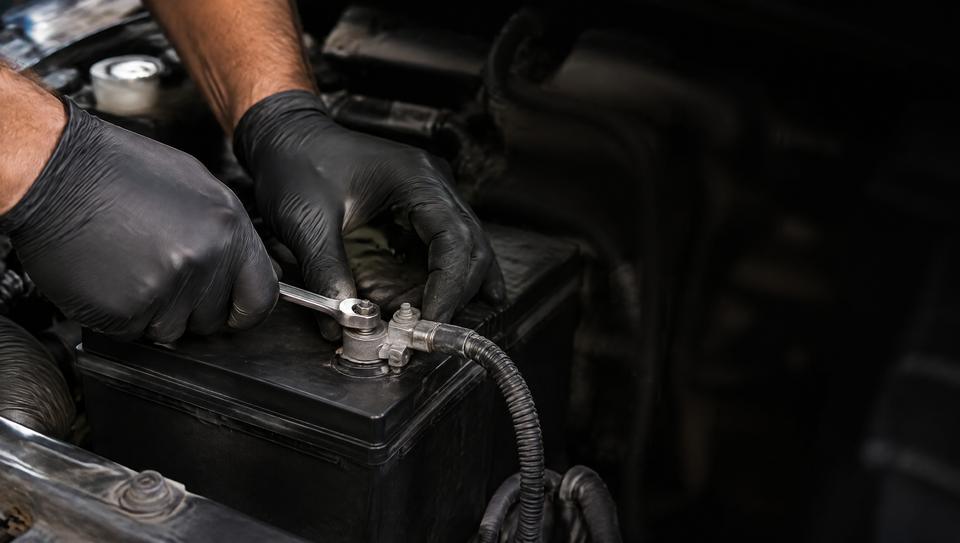
- Clean, tight terminals, with any corrosion dealt with.
- The old battery taken away for recycling.
Our take
Once the battery is past three years old, we'd have it tested at every service and replace it before the wet season rather than in the middle of it. A flat battery in a car park during a February storm is the version of this job nobody wants.