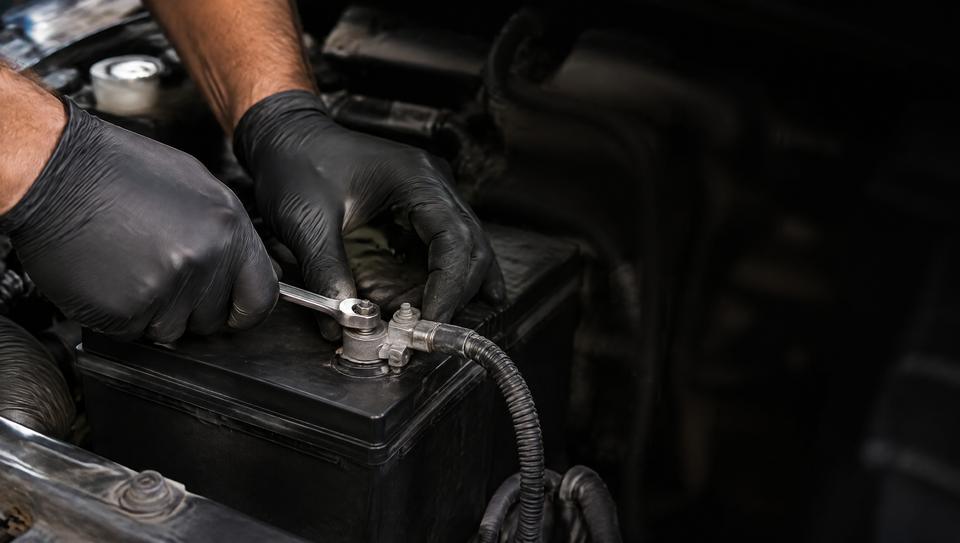
Flat battery on the road or the sand?
Get everyone somewhere safe, away from traffic, with the hazard lights on, and call roadside assistance if you have it. If anyone's hurt or in danger, call 000. On a beach, watch the tide and move people well above it: the car can wait. NRMA calls jump-starting a modern car a high-risk job, so use spike-protected leads or a jump pack, and don't jump a battery that's cracked, leaking or smells of rotten eggs.
Why do batteries go flat on the Sunshine Coast?
Cars that sit. A car at the holiday house, a second car at the unit, or a 4WD kept for weekends can go weeks without a run. RACT says cars left unused tend to see their battery fail sooner.
Extra gear. RACT lists dash cameras, reverse cameras and trailer brake controllers among the accessories that can drain a battery with the car switched off. If a tow vehicle or beach 4WD with that kind of fit-out keeps going flat, the mechanic should look for the drain, not just fit a new battery.
Keyless entry. RACQ says a car that isn't locked stays awake searching for its key, so lock it, even in the garage or the unit car park.
Short trips. Under 20 minutes behind the wheel isn't long enough for the alternator to recharge the battery, by RACV's reckoning. A week of errands around Buderim or Kawana, with no run up the motorway, is exactly that kind of driving.
Battery points particular to the Sunshine Coast
Before a beach trip
NRMA suggests a battery test before a long trip, and once or twice a year once a battery is about three years old. A tired battery is a poor thing to discover at Cooloola, where RACQ advises driving the sand within two hours either side of low tide.
Is it the battery at all?
Slow cranking and fading dash lights can also mean a faulty alternator, says RAC WA, and a meter test tells the two apart. RACV adds that the battery light on the dash can point to the charging system rather than the battery.
No licence to look up
Queensland doesn't license mechanics in general, mobile or otherwise. Ask the business about its ABN and insurance, and who'll be doing the work.
Will any battery that fits do?
No. RACV says a replacement should have the same or a higher cold cranking amps (CCA) rating, and the same size and terminal layout. RAC WA says AGM batteries suit hybrid and stop-start cars, and some new batteries need the car's electrical system reset, which it calls battery registration. A mechanic who works on your make will know which applies.
If the 4WD runs a second battery for a fridge or camping gear, say so in the note, because that's a different setup again.
What you can do, and what to leave
You can
- Lock the car, even in a garage or a unit car park.
- Give a car that mostly sits a drive of 20 minutes or more each week.
- Note when it struggles: first thing, after a few days parked, or with accessories running.
- Look for a swollen case or blue-green crust on the terminals, without touching either.
Leave to the mechanic
- Testing the battery and the charging system properly.
- Fitting the right type and size, and any reset the car needs.
- Tracking down a drain if it keeps going flat.
- Taking the old battery away for recycling.
If it were our car
If the battery's past three years and the car's heading up the beach or out on a long tow, we'd have it tested first. If it's already flat in the driveway, we'd pick "Come to me" and mention any dash cam, trailer brake controller or second battery, so the mechanic checks for a drain as well as the battery.