Heavy smoke, or the engine revving on its own?
Pull over somewhere safe, switch off and get everyone away from the car. A failed turbo can put engine oil into the exhaust, which makes heavy blue-grey smoke. On a diesel, leaking oil can even feed the engine so it keeps running. If it won't stop, or you can see flames, stay clear and call 000. Otherwise, don't restart it. Call roadside assistance if you have it.
What does a turbo do?
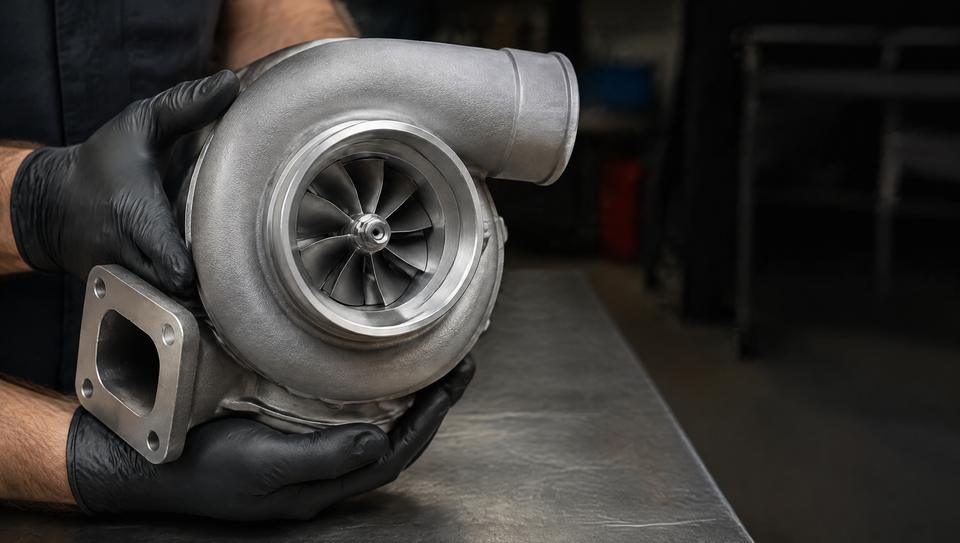
A turbocharger uses exhaust gas to spin a turbine, which spins a compressor on the same shaft, pushing more air into the engine. More air means more power from a smaller engine. An intercooler then cools that air, and a wastegate keeps boost within limits.
It's working in a hard place. A turbo can spin at up to 250,000 rpm, right next to the hot exhaust, and relies on a clean, steady supply of oil to keep its shaft from touching anything. Many diesels use a variable-geometry turbo, with adjustable vanes that reduce lag at low engine speeds.
Signs a turbo needs a look
- Lost power, particularly a car that feels flat where it used to pull.
- A new whistle, whine or siren noise that rises with the revs.
- Blue-grey smoke from the exhaust, or oil use that's suddenly gone up.
- The engine light on, or the car dropping into limp mode.
- Oil inside the intercooler pipes, found at a service.
Is it actually the turbo?
Often it isn't. Before anyone orders a turbo, a mechanic should check for split boost hoses and leaking clamps, a stuck wastegate or vanes, a faulty boost sensor, a blocked air filter, and on a diesel, a blocked DPF. Any of these can lose boost or set a boost code, and most are smaller jobs than a turbo.
A hands-on check helps too. With the intake pipe off and the engine stopped, the mechanic can look for damaged blades and feel for play in the shaft.
Why do turbos fail?
Engine Professional, a magazine for engine builders, lists the most common failures as contaminated oil, lack of oil, debris in the air stream, excess heat, hot shutdowns and rotating parts touching the housing. Most of those trace back to the oil or the air getting to the turbo, not the turbo itself.
That's why the cause matters so much. If the oil feed pipe is partly blocked, the oil's overdue, or a piece of debris is still in the intake, the new turbo inherits the same problem. A proper job checks the oil feed and drain, changes the oil and filter, and cleans out the intercooler and pipes if the old turbo left oil or metal behind.
Repair, rebuild or replace?
| Repair something around it | Rebuild the turbo | Fit a new or exchange turbo | |
|---|---|---|---|
| What it means | Fix a hose, actuator, sensor or vanes | Strip it, then fit new bearings and seals, and balance it | Swap in a new or reconditioned unit |
| When it fits | The turbo itself tests fine | The housings are sound and parts are available | Housings are damaged, or the turbo is badly worn |
| What to ask | What proved it wasn't the turbo | Who does the rebuild, and is it balanced | Is it the right part number, and what's the warranty |
What a good written estimate covers
- How the fault was proven, including any tests for boost leaks.
- New, rebuilt or exchange, and the warranty on the unit.
- New oil feed and drain lines, or a check of the old ones.
- Oil and filter change, and an air filter if it's due.
- Cleaning of the intercooler and pipes, if there's oil or metal in them.
- What caused the failure, and what's been done about it.
What you can do, and what's the mechanic's job
You can
- Keep to the oil and filter schedule, using the oil your manual lists. Turbo engines depend on it.
- Check the oil level on a cold, level car, and watch for it dropping.
- Let the engine idle for a little while after hard driving or towing before you switch off, if your manual suggests it.
- Keep the air filter on schedule, sooner if you drive on dusty roads.
Leave to the mechanic
- Anything on or around the turbo. It stays hot long after you've stopped.
- Boost and leak tests.
- Fitting and priming the turbo, so it has oil before it first spins.
Where we'd start
We'd ask one question before agreeing to a new turbo: what killed the old one? A mechanic who can answer that has done the real work. We'd want boost leaks ruled out, the oil supply checked and the warranty on the unit in writing. On a turbo diesel, go to someone who sees these engines every week, because they'll know what usually fails on that car.