Exhaust fumes in the cabin?
Fumes inside the car are a reason to stop. Wind the windows down, pull over somewhere safe and switch off, and get out if anyone feels dizzy or unwell. Leave the car parked until a mechanic has found the leak. If anyone is hurt or in danger, call 000.
Why Geelong exhausts and DPFs give trouble
Town trips versus the freeway
A diesel particulate filter (DPF) traps soot and burns it off on sustained highway driving. RACQ says low-speed, stop-start driving is the most common cause of DPF problems. A diesel that only does short runs around Belmont or the city centre rarely gets the chance, while the Princes Freeway towards Melbourne, at 100 km/h, gives it one.
Salt, sand and bare metal
Exhaust pipes and mufflers are bare metal hanging under the car. RACV says exposed metal underneath is vulnerable to rusting, and RACQ's advice after beach driving is to wash the sand and saltwater off the underbody as soon as practical. For cars at Ocean Grove, Barwon Heads or Torquay, a rinse underneath now and then is worth the effort.
Victoria's emissions rule
EPA Victoria says vehicles on the road must meet emissions standards, and that it's against the law to use one that doesn't. It also says it can't approve changes to an exhaust such as diesel particulate filters.
DPF light on? What to do
Read the owner's manual
RACV says to follow the maker's instructions when the DPF light comes on. They usually say what kind of drive the car needs.
Give it a steady run, if it's safe
RACQ says a regeneration typically takes five to 25 minutes at about 80 km/h or more, and once it starts it has to finish. Don't switch off halfway through if the dash shows it's regenerating.
If the engine light is on too, stop trying
RACV says a second fault may be stopping the filter from regenerating, and RACQ says a filter that's ignored can put the car into limp-home mode. That's a job for a diesel mechanic, not another drive.
Tell the mechanic how the car is driven
Short trips, towing, how often it sees the freeway. RAA's fix for a car that mostly does short trips is a weekly 20 to 30-minute drive at highway speeds.
What happens if the filter is badly blocked?
A filter that won't clear on the road needs a forced regeneration with the mechanic's equipment. RACQ says that can also call for an engine oil and filter change, because fuel can get into the oil. A replacement DPF is a big job, which is why finding the cause comes first.
Leaks, rattles and the catalytic converter
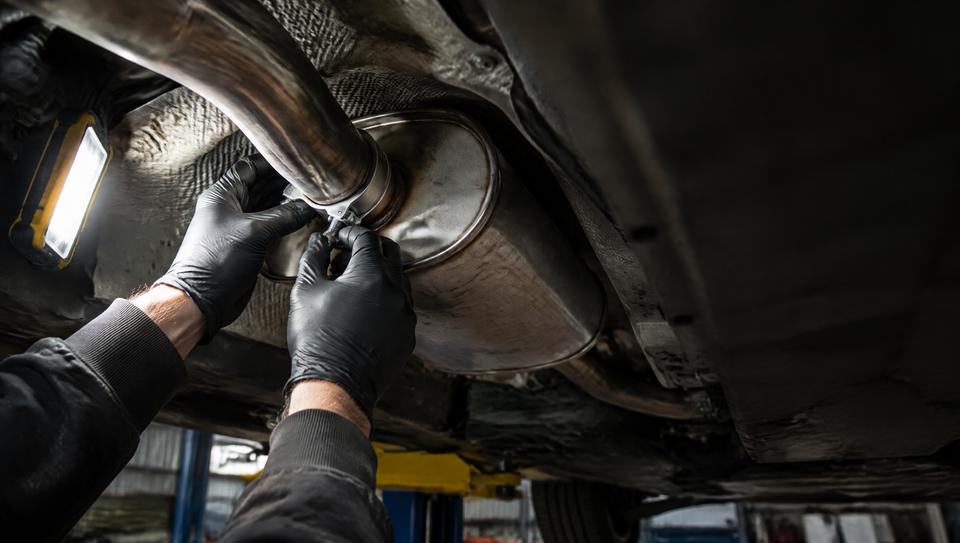
On petrol cars, the usual jobs are a blowing joint, a broken hanger or a muffler rusted through. A new rattle underneath is worth catching early.
RACQ says catalytic converters fail from misfiring, an overly rich fuel mixture or oil burning in a worn engine, and that hitting speed bumps or road debris can destroy one. If a converter has failed, ask the mechanic what caused it, or the new one may go the same way.
What the written estimate should say
- For a DPF: whether it was regenerated, cleaned or replaced, and what made it block.
- Any oil and filter change done after a forced regeneration.
- For rust: which sections are being replaced and how they're joined.
Where we'd start
For a diesel with the light on, we'd read the manual, give it one proper freeway run if that's safe, and if the light comes back, send it to a diesel mechanic with a note on how the car is driven. For a petrol car with a new rattle or a louder note, we'd get it on a hoist before a small fix becomes a whole new section.