Why heat matters for a battery in Cairns
NRMA says most car batteries last three to five years, and that extreme heat or cold can cut that short. RACT adds vibration and heavy electrical loads to the list. In a tropical climate, that makes the three-year mark a sensible point to start testing once or twice a year, which is what NRMA recommends.
How the car is used counts too. RACV says trips under 20 minutes don't give the alternator time to recharge the battery, and in hot weather it suggests parking in the shade or a garage. A car that only does short runs to the shops may never get a full charge.
Batteries and Cairns driving
Before a trip up the range or the Cape
NRMA suggests a battery check before any long road trip. A car that won't start in Cooktown or Weipa is a far bigger problem than one that won't start at home, so have it tested before you leave Cairns.
Cars left sitting
RACT says cars left unused will likely see a battery fail sooner. RACQ adds that keyless entry draws power while the car's parked if it isn't locked, because the car stays awake looking for the key. Lock it, even in the carport, if you're away for a while.
Stop-start cars need the right battery
RACV says many modern cars need an AGM battery, which suits stop-start. RACT warns that a wrong or substandard battery can cause a no-start even when it's fully charged. Give the make and model so the mechanic brings the right one.
Coming to you
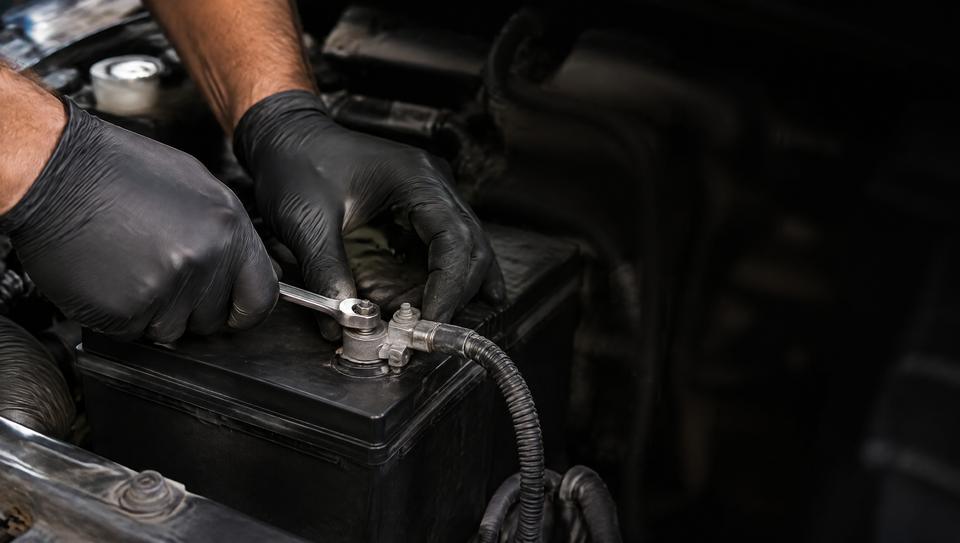
Battery work suits a mobile mechanic well: the test, the fitting and any reset the car needs can all happen in a driveway or a car park. Pick "Come to me" in the card, or see mobile mechanics in Cairns.
Signs it's time for a test
- Slow or hesitant cranking, often worst first thing in the morning.
- A single click when you turn the key or press start.
- Dim lights, slow wipers or remote locking that's stopped working.
- A swollen battery case, or blue or green residue on the terminals.
- Needing a jump start more than once.
- The battery light on the dash, which can also point to the alternator.
Your part, and the mechanic's
You can
- Park in shade or under cover when you can.
- If the car mostly sits, give it a run of at least 20 minutes once a week.
- Lock the car, even at home, if it has keyless entry.
- Keep the receipt for the battery so you know how old it is.
Leave to the mechanic
- Testing the battery and the charging system together, so an alternator fault isn't missed.
- Fitting the right type and size for the car.
- Any battery registration (the reset some cars need after a new battery).
- Taking the old battery for recycling.
What we'd do
We'd have the battery tested at each service once it's three years old, and again before any long drive north. If it shows weak, we'd replace it at home or at work on a day that suits, rather than wait for it to die in a car park in the middle of the wet.